

Source: Radio New Zealand
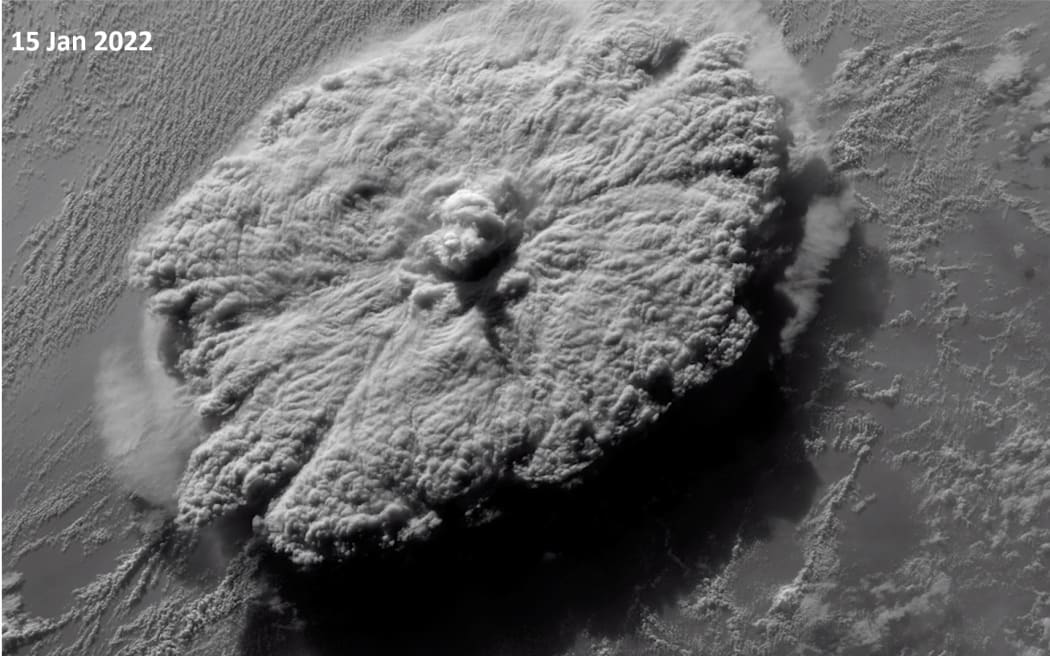
Photo:
It is known as the day Tonga went black. January 15th marks four years since the devastating eruption of the Hunga Tonga-Hunga Ha’apai volcano and the tsunami that followed.
Three people lost their lives and major damage was caused to infrastructure and crops in the surrounding islands. But it is the mental impacts which have scarred the local community the deepest.
Scientists described the underwater volcano as one of the largest volcanic eruptions in recorded history, equivalent to five underground nuclear bombs. It was an explosion that no one who experienced it could ever forget.
Business owner Liz Sullivan remembers that fateful day clearly. She was driving to safety with her late mother.
“As soon as we just turned this little turn, the world went dark and we could hear the bang, bang, bang and ash was down, falling, you know,” she recalled.
Hours later, she looked out at a surreal scene.
“When we went out and saw the ash was almost ankle high and it was just a very airy feeling in Tonga, you know, it was like something out of a movie. You never thought this would happen to us, but it did,” Sullivan explained.
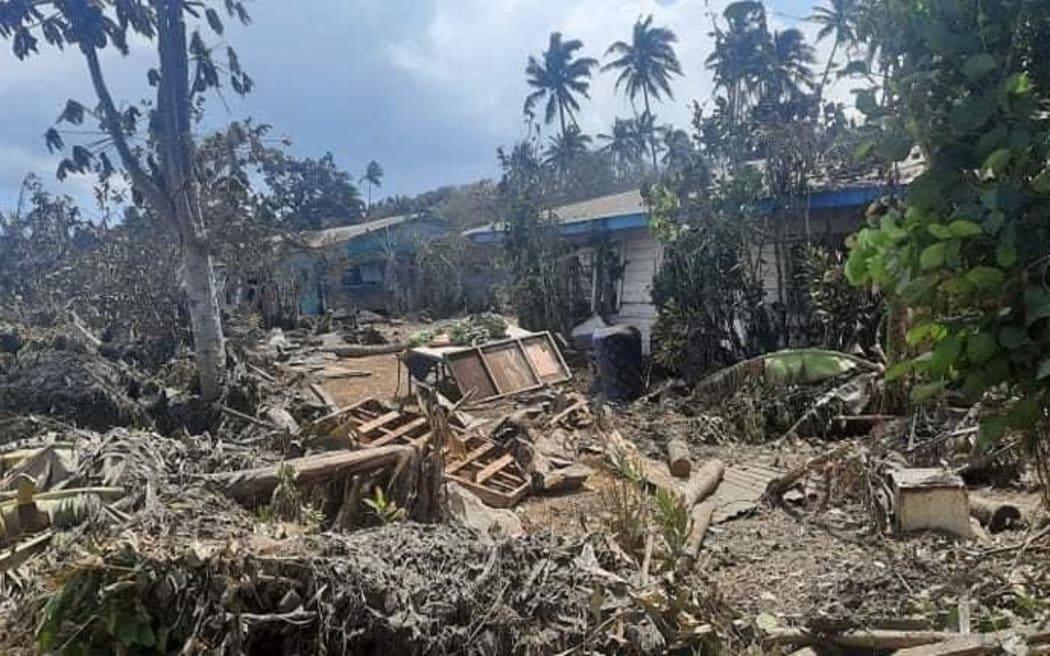
Photo: Consulate of the Kingdom of Tonga
Survivor Lusiana Kikau and her family are just grateful to be alive. They were employees of Fafa Island Resort. The small island, which is a 30-minute boat ride away from Tonga’s capital Nuku’alofa, was destroyed by the tsunami.
Kikau remembers sitting on the beach when the tsunami hit, and her main priority was to save her daughter who was 10 years old at the time.
“So, we just trying to save, save our daughter, so we try to clear with other two Fijian staff we were together on that island, just try to save our daughter. So, she climbed up on the tree. I just used the rope to tie around my waist when the waves start coming in,” Kikau recalled.
Kikau admitted that she was still traumatised by the event.
“Sometime when I heard loud sound like I’m scared, I always remember what happened on that day, when the loud sound like thunder or any sound,” she said.
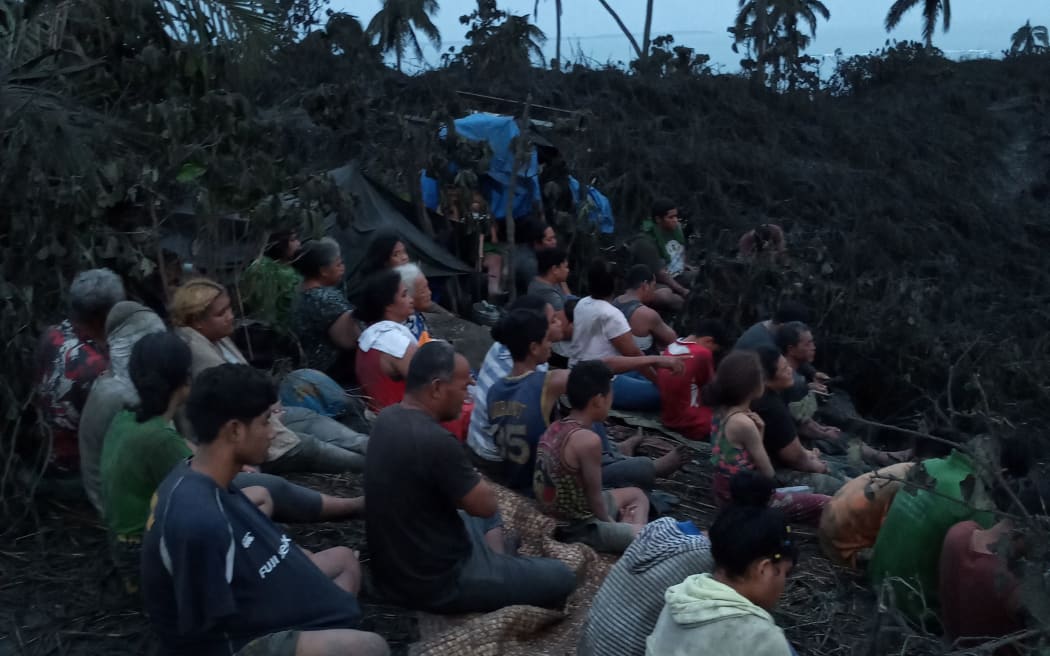
This handout photo taken on January 16, 2022 and received on January 25 courtesy of Rev. Kisini Toetu’u via Matangi Tonga shows survivors praying on a hilltop at dawn on Mango Island, following the January 15 eruption of the nearby Hunga Tonga-Hunga Ha’apai underwater volcano. Photo: AFP PHOTO / Courtesy of Rev. Kisini Toetu’u via Matangi Tonga” –
In the immediate wake of the disaster, the Pasifika Medical Association Group sent an emergency response team of medical professionals to Tonga. It has subsequently returned each year with support focused on addressing the well-being of individuals.
PMA’s CEO Debbie Sorensen said today many people will be feeling overwhelmed by the legacy of the disaster.
“I think the anniversary brings up all sorts of feelings for people, you know, there are feelings of grief over what people have lost.
“There’s anxiety and fear, you know, I imagine quite a lot of people will be looking at that horizon wondering whether it’s going to be another one on the same day. You know, those are quite normal feelings,” she notes.
Sorensen said it’s important for those suffering trauma to seek help from the resources available, including reaching out to local mental health professionals
“The Tongan Mental Health Group is actually very well known amongst our community and in Tonga,” she said.
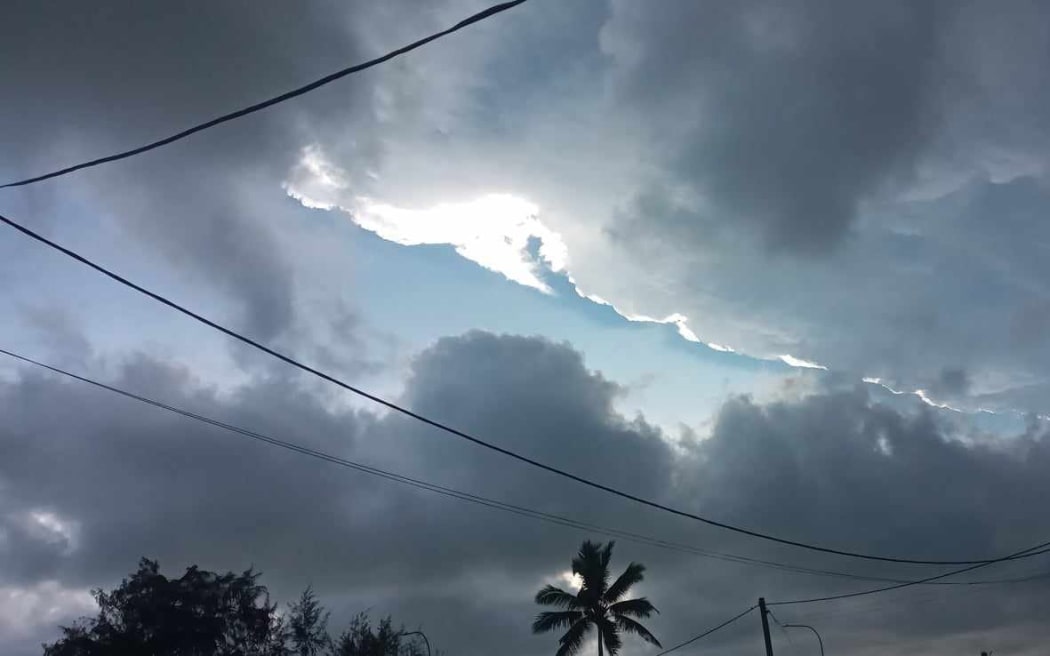
Volcanic clouds cover the skies over Tongatapu at around 5pm on 15 January 2022, as the Hunga Tonga – Hunga Ha’apai volcano started erupting. Photo: Iliesa Tora
The traumatic event has left devastating effects on people’s well-being in Tonga. For some people, the full impacts of trauma are delayed, and four years on many people are still grappling with the worst of it – a complex set of fears and emotions that may not be visible to others but is very real for the people affected.
Sullivan said she is deeply concerned about the people around her, and said more professional help is needed to help the community.
“Someone passionate that can a listener you know, to help these people, they’re broken,” Sullivan said.
“Because I don’t think some will ever be able to recover from this at all.”
Sorensen agreed that more needs to be invested in resources.
“I think that technology, you know, has played its part in being able to extend the services that are offered. But there’s no question that there needs to be more investment in more resources applied.”
– Published by EveningReport.nz and AsiaPacificReport.nz, see: MIL OSI in partnership with Radio New Zealand